Pull the Lever, Lose the Banana: How Solana Turned You Into a Full-Time Degenerate Gambler
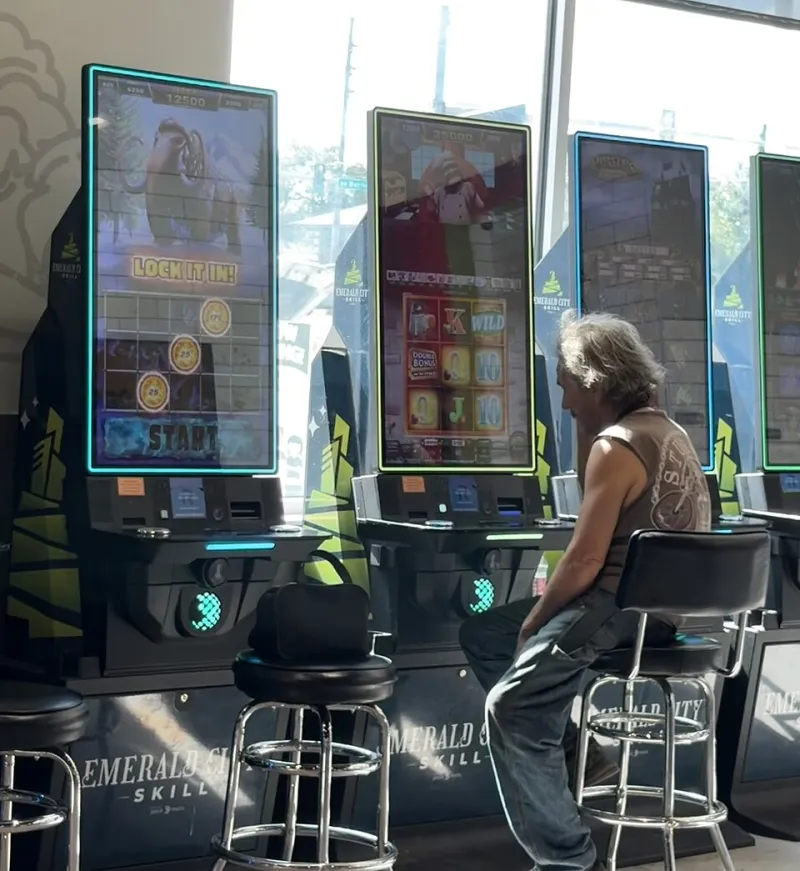
Photo: Catboy69, CC0, via Wikimedia Commons
Let's be honest with ourselves for a second. When was the last time you opened your Solana wallet with a calm, rational, long-term investment thesis? When was the last time you thought, "I've done my due diligence, assessed the risk-adjusted return profile, and I'm comfortable holding this position for eighteen months"?
Yeah. We didn't think so.
More likely, you saw a ticker moving on X, your thumbs started sweating, and you were in the position before you could finish reading the contract address. That's not investing. That's pulling a lever and hoping three bananas line up.
Welcome to the Solana Slot Machine. Population: almost everyone.
The Infrastructure That Built the Casino
Here's the uncomfortable truth that nobody in the Solana ecosystem wants to say out loud: the very features that make Solana genuinely great are the same features that make it genuinely dangerous for your portfolio.
Four-hundred-millisecond block times. Transaction fees that cost less than a gumball. A DEX ecosystem so liquid you can move five figures in seconds without meaningful slippage. On paper, this is the future of finance. In practice, for the average retail trader sitting in their apartment in Columbus or Charlotte, it's a slot machine that never closes, never runs out of coins, and never asks you to slow down.
Compare this to the early Ethereum experience. High gas fees were annoying, sure. But they also functioned, accidentally, as a speed bump. Before you swapped into some random token at 2 a.m., you had to confront a $40 gas fee staring you in the face. That friction made you think, even briefly. It created a moment of hesitation that the lizard brain sometimes needed to catch up with the rational brain.
Solana removed the speed bump entirely. And the lizard brain has been running wild ever since.
The Dopamine Architecture Nobody Warned You About
Neuroscience has known for decades that variable reward schedules — where you win sometimes but not always, unpredictably — are the most psychologically addictive patterns humans can experience. It's why slot machines are designed the way they are. It's why social media feeds are algorithmically chaotic. And it's, whether intentionally or not, exactly what rapid-fire meme coin trading on Solana delivers.
You ape into a token. Sometimes it goes 4x in two hours. More often it crabs sideways and slowly bleeds. Occasionally it rugs completely. But that sometimes is enough. The occasional win floods your brain with dopamine, and your brain immediately starts constructing a narrative that you're skilled, that you read the chart correctly, that you have an edge.
You don't. You got lucky. But your brain doesn't file it under "luck." It files it under "I'm good at this."
Data from on-chain analytics platforms consistently shows that the median Solana meme coin trader holds a position for less than 24 hours. On Ethereum, even during peak meme season, median hold times trend longer — partly because of fees, partly because slower block times create a different psychological rhythm. Solana's speed collapses the psychological distance between impulse and execution to nearly zero. And zero distance between impulse and execution is the definition of compulsive behavior.
The Scoreboard Is Lying to You
One of the sneakiest tricks the Solana casino plays on you is the scoreboard problem. Because transactions are cheap and fast, most active traders on Solana execute far more trades than they realize. And humans are notoriously bad at tracking their own performance when the data is spread across dozens of small transactions.
You remember the 3x. You don't remember the six positions that each lost 40%. The wins are vivid and emotionally significant. The losses blur into background noise. This is called the availability heuristic, and it is absolutely destroying your actual net returns while you feel like you're winning.
If you've never sat down and actually exported your transaction history and calculated your real, honest, all-in return including fees, failed transactions, and every single loss — do it. Right now. Before you read the rest of this article. We'll wait.
Brutal, wasn't it?
How to Escape the Casino Without Leaving the Jungle
Nobody here is telling you to stop trading Solana. That would be like telling a monkey to stop climbing trees. It's unnatural, and frankly, the gains are real when you approach them correctly. The goal isn't to leave the casino — it's to stop being the sucker at the table.
Introduce artificial friction. Since Solana won't charge you to slow down, charge yourself. Before any trade, write down in a notes app — actual words, not just a ticker — why you're entering this position, what your exit looks like on both the upside and downside, and what percentage of your portfolio this represents. If you can't complete that exercise, you don't have a trade. You have a gamble.
Set a "degen budget" and protect everything else. Allocate a fixed percentage of your crypto portfolio — maybe 10-15% — as your designated play money. This is your slot machine budget. You can pull levers with it, chase memes with it, ape into things your gut says will pop. Everything outside that bucket gets treated like a grown-up portfolio: diversified, researched, and held with conviction.
Track everything, mercilessly. Use a portfolio tracker that shows you your actual performance, not just your open positions. Seeing real numbers — including all the losses — counteracts the scoreboard illusion your brain is running.
Use time locks on yourself. Some Solana wallets and DEX interfaces allow limit orders. Use them. Setting a buy order at a specific price rather than market-buying in a panic forces you to make the decision when you're calm, not when you're hyped. The version of you that set the limit order yesterday is smarter than the version of you reading a Telegram channel at midnight.
Find a crew with actual standards. The Solana community is enormous and genuinely excellent at helping each other — when the community is good. Surround yourself with people who talk about fundamentals, tokenomics, and on-chain data, not just people who share contract addresses and rocket emojis. Your tribe shapes your behavior more than any article will.
The Jungle Isn't Going Anywhere
Solana is still, genuinely, one of the most exciting places in crypto. The speed is real. The innovation is real. The opportunities for regular people to build actual wealth here are real — and we've covered plenty of those stories on this site.
But opportunity and a casino aren't the same thing, even when they look identical from the outside. The difference is entirely in how you approach the chair.
The wildest apes in this jungle aren't the ones pulling levers the fastest. They're the ones who figured out which levers are actually connected to something.
Everybody else is just making noise and losing bananas.