Ghost Founders and Borrowed Faces: The Solana Scammer Playbook Nobody Warned You About
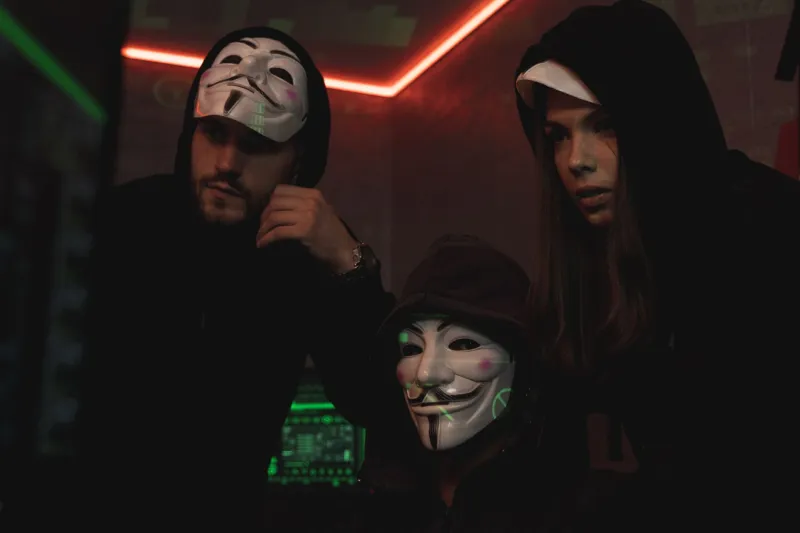
Let's get one thing straight: the guy in the project's promo video wearing a Patagonia vest and talking about "revolutionizing DeFi on Solana" might not exist. Or more precisely, the real person in that vest has absolutely no idea a crypto project is using his face. Welcome to the era of the ghost founder—where exit scammers don't just steal your money, they steal somebody else's entire identity to do it.
Solana's speed and low transaction costs made it a paradise for legitimate builders. Unfortunately, it made it an even better paradise for con artists who can spin up a token, generate hype, and disappear before most traders have finished reading the whitepaper's executive summary. The jungle is full of these creatures, and they've gotten disturbingly good at looking like the real thing.
Here's how to stop being the mark.
The Fake LinkedIn Problem Is Worse Than You Think
The first thing a sophisticated exit scammer builds isn't a smart contract—it's a credible paper trail of human beings. LinkedIn profiles with stock-photo headshots, three to five years of fabricated work history at mid-tier tech companies nobody will actually call, and a handful of endorsements from accounts that were created the same week. It looks legitimate on a thirty-second scroll. It's designed to.
Your move: reverse image search every founder photo. Google Images and TinEye both work. If that "CTO with 12 years of blockchain experience" is actually a stock model from Shutterstock, congratulations—you just saved your portfolio. Also cross-reference the LinkedIn URL creation date using web archive tools like the Wayback Machine. A legitimate founder who's been in crypto for years will have a digital footprint that predates the project announcement by a significant margin. A ghost founder's LinkedIn will have been born roughly three weeks before the token launch.
GitHub Histories Don't Lie (But Scammers Try to Make Them)
Every legitimate development team leaves a real trail on GitHub. Not a trail of forked repos with one commit that says "initial setup" and then nothing for six months—actual commit histories showing iterative work, bug fixes, code reviews, and the kind of messy, incremental progress that real software development looks like.
Scammers have learned to fake this too, but imperfectly. Watch for GitHub accounts where all the meaningful commits happened within a compressed two-to-four week window right before launch. Watch for repos where the code is suspiciously clean and complete for a "startup team"—sometimes it's because they copied it wholesale from an open-source project and changed the token name. Run the core contract code through a plagiarism check against known open-source Solana repositories. Tools like Sourcegraph can help you trace whether that proprietary smart contract is actually just a reskinned version of something already public.
Also check contributor activity. A real dev team has multiple contributors with independent histories. If one account has done 97% of the commits and that account was created the same month as the project, your skepticism antenna should be vibrating at maximum frequency.
Discord: Where the Social Engineering Really Happens
If LinkedIn is the front door and GitHub is the back door, Discord is where scammers actually live. And they are very, very good at running Discord servers.
Here's what a fraudulent project Discord looks like from the inside: aggressive moderation that deletes any skeptical questions within minutes, a team of "community managers" who are almost certainly just sock puppet accounts pumping artificial enthusiasm, and a channel called something like #ape-together or #diamond-hands that exists purely to manufacture social proof. The mods are always online. The vibes are always immaculate. Nobody is ever allowed to have a bad day.
Legitimate projects have messy Discords. Real communities argue. Real developers get frustrated and say so. Real community members post memes that have nothing to do with the project. If a Discord server feels like a carefully managed PR environment where dissent is physically impossible, that's not community—that's a controlled information environment designed to prevent you from thinking clearly.
Check when the server was created relative to the token launch. Check whether the "founder" account in Discord has any history of participation in other servers—real crypto builders tend to show up in ecosystem-wide conversations, not just their own project's echo chamber.
The Whitepaper Credibility Audit
A plagiarized whitepaper is one of the most reliable red flags in the scammer toolkit, partly because most retail investors don't read whitepapers and partly because the ones who do rarely compare them against other documents.
Run the whitepaper through Copyscape or even just paste large sections into Google with quotation marks. Scammer whitepapers frequently lift entire paragraphs from legitimate projects—sometimes from Ethereum-era documents that most Solana-native traders have never encountered. Swap out the chain name, change a few numbers, and suddenly it's a "novel" tokenomics model.
Beyond plagiarism, evaluate internal coherence. Does the tokenomics section actually add up mathematically? Are the vesting schedules described in enough detail to be enforceable, or are they intentionally vague? Does the roadmap include specific, falsifiable milestones with dates, or is it a fog of words like "ecosystem expansion" and "strategic partnerships" with no measurable outcomes attached? Vagueness in a whitepaper isn't a stylistic choice—it's legal cover for a team that has no intention of delivering anything.
On-Chain Behavior Before the Launch
Solana's blockchain is public. Use it. Before deploying capital, look at the wallet addresses associated with the founding team. Tools like Solscan and Step Finance let you trace wallet activity in granular detail. Are the team wallets newly created? Did they receive a large initial allocation of tokens that immediately started moving toward exchange deposit addresses? That's not a development team—that's a distribution mechanism for an exit.
Also look at the token's initial liquidity pool. Was liquidity locked, and if so, for how long, using which locker, and verifiably on-chain? "Locked liquidity" that exists only as a screenshot in the Discord announcement channel is not locked liquidity. It's a JPEG.
The Gut Check Nobody Talks About
After you've done all the technical due diligence, there's one final question worth asking yourself: why is this team so aggressively friendly with retail investors? Legitimate builders are usually too busy building to spend eight hours a day in their own Discord hyping up their own project. When the founder is personally DMing community members, hosting daily voice chats, and positioning himself as your best friend in the jungle—that's a sales operation, not a development operation.
The wildest apes survive not because they're the fastest or the strongest, but because they learned to recognize which parts of the jungle are dangerous. Ghost founders are everywhere on Solana right now. They're wearing borrowed faces, writing borrowed whitepapers, and running Discord servers designed to make you feel too comfortable to ask hard questions.
Ask the hard questions anyway. Your bananas depend on it.