Who's Really Running the Jungle? The Validator Power Grab Most SOL Traders Are Sleeping On
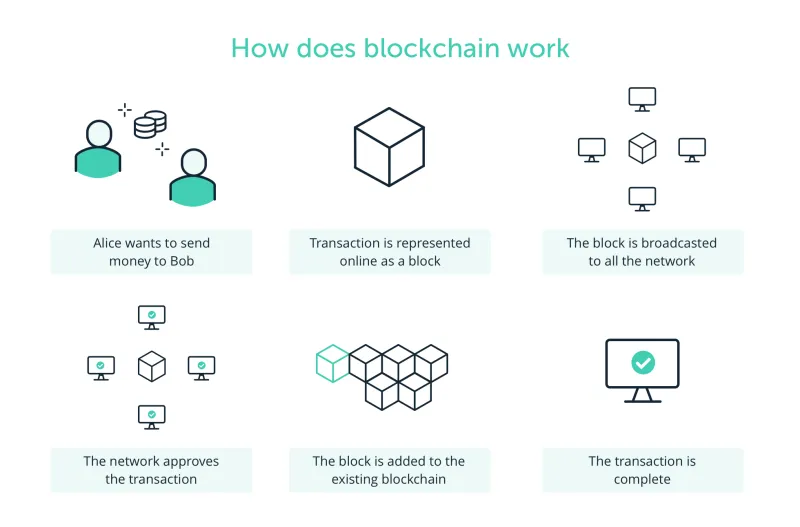
Photo: blockchain network nodes infrastructure server room digital, via www.ledger.com
Let's be honest. Most of us showed up to Solana for the same reasons: cheap transactions, fast confirmations, and the faint hope that some cartoon monkey JPEG or dog-themed token would turn a hundred bucks into a down payment on a house. Fair enough. That's the visible jungle — loud, chaotic, and occasionally profitable.
But underneath that canopy, there's a quieter game being played. One with fewer memes, more compounding interest, and a power structure that would make a Fortune 500 boardroom feel right at home. We're talking about Solana's validator ecosystem — and if you haven't thought about it seriously, you're essentially wandering around the jungle without knowing who owns the trees.
What Even Is a Validator, and Why Should an Ape Care?
Here's the quick-and-dirty version. Solana is a proof-of-stake blockchain, which means the network doesn't rely on energy-guzzling mining rigs to confirm transactions. Instead, it uses validators — nodes run by individuals, companies, or institutions — to process transactions and keep the chain honest. In exchange for doing that work, validators earn a cut of newly minted SOL and a slice of transaction fees.
Sounds straightforward, right? Here's where it gets interesting.
Not all validators are created equal. The amount of influence a validator has over the network is directly tied to how much SOL is staked to it. This is called stake-weighted voting. A validator sitting on a mountain of delegated SOL gets a proportionally larger say in confirming blocks — and earns proportionally larger rewards. It's basically a plutocracy with better branding.
The top validators on Solana — many of them run by venture-backed firms, exchanges, or well-connected foundations — collectively control a significant chunk of staked SOL. That concentration isn't just a philosophical problem for decentralization purists. It has real downstream effects on everything from network stability to the subtle economics of transaction ordering.
The Invisible Apes at the Top of the Canopy
Here's a concept that doesn't get nearly enough airtime in retail crypto circles: stake concentration creates invisible leverage. When a small number of validators control a large portion of stake, they have outsized influence over which transactions get processed first, how quickly blocks are confirmed, and — critically — which MEV (maximal extractable value) opportunities get captured.
If that last term rings a bell, it should. MEV is essentially the ability to profit by reordering or inserting transactions within a block. On Ethereum, this has been a well-documented wealth transfer from regular users to sophisticated players for years. Solana's architecture handles MEV differently, but it doesn't make it disappear. It just changes who's positioned to extract it.
Large validators with high stake weight and low-latency infrastructure are better positioned to win block leader slots more frequently. More leader slots mean more opportunities to capture fees, shape transaction order, and — in some configurations — benefit from priority fee dynamics that retail traders are essentially subsidizing without realizing it.
So who are these invisible apes? They're not necessarily shadowy villains. They're sophisticated operators who understood early that the real long game in Solana wasn't buying tokens — it was building the infrastructure that processes everyone else's token trades. Respect the hustle, even if it stings a little.
The Decentralization Tug-of-War
Solana's core team and broader community are genuinely aware of this tension. There have been ongoing efforts to encourage stake distribution — things like the Solana Foundation's delegation program, which actively directs stake toward smaller, independent validators to prevent the network from becoming a two-horse race between Coinbase and a handful of VC-backed node operators.
But let's not sugarcoat it: decentralization is hard, and economic incentives push in the opposite direction. Running a high-performance Solana validator isn't cheap. You need serious hardware, reliable data center colocation, and the technical chops to keep your node humming through network upgrades and turbulence. That naturally filters for well-capitalized players.
The result is a spectrum. On one end, you have institutional-grade validators with hundreds of millions in delegated stake. On the other, you have scrappy independent operators running lean setups, often subsidized by foundation delegation, trying to keep the network's soul intact. The middle is thinner than idealists would like.
So What Can a Regular Ape Actually Do?
Here's the part where this stops being an abstract civics lesson and starts being actionable. You don't need to spin up your own server rack to participate in validator economics. You just need to be smarter about where you stake your SOL.
Delegation is the retail ape's entry point. When you stake SOL through a wallet like Phantom or Solflare, you're delegating to a validator and earning a share of their rewards — typically somewhere in the 6-8% APY range, depending on the validator's commission rate and performance. Most people just click the default option and forget about it. That's leaving nuance on the table.
A few things worth paying attention to:
-
Commission rates: Validators charge a percentage of rewards as their fee. Lower commission means more of the yield flows back to you. But don't just chase the lowest rate — a validator charging 0% commission might be doing so temporarily to attract stake, or might be running an operation that's one power outage away from going dark.
-
Uptime and performance: Validators that miss blocks or vote incorrectly get penalized, and those penalties trickle down to delegators. Tools like Stakewiz, Validators.app, and the Solana Beach explorer let you audit validator performance before you commit your SOL.
-
Decentralization impact: This one's more philosophical, but it matters. Staking with a smaller, independent validator rather than a giant exchange node actively contributes to a more distributed network. It's the crypto equivalent of banking local instead of handing your money to a megabank.
-
Liquid staking: Protocols like Marinade Finance and Jito have introduced liquid staking derivatives — you stake your SOL and receive a token (mSOL, jitoSOL) that represents your staked position. This lets you keep your capital productive in DeFi while still earning staking rewards. It's two bananas for the price of one, more or less.
The Bigger Picture
Solana's validator ecosystem is a microcosm of a tension that runs through all of crypto: the gap between the decentralization story we tell ourselves and the centralization pressures that economic reality keeps pushing us toward. It's not unique to Solana — Ethereum's validator concentration post-merge has its own critics — but on a network this fast and this financially active, the stakes feel higher.
The apes who get rich in the next cycle won't all be the ones who bought the right meme coin at 3 AM. Some of them will be the ones who quietly understood the infrastructure layer, staked strategically, chose validators wisely, and let compounding do its thing while everyone else was refreshing price charts.
The jungle has layers. The ones who climb highest are usually the ones who bothered to look up.