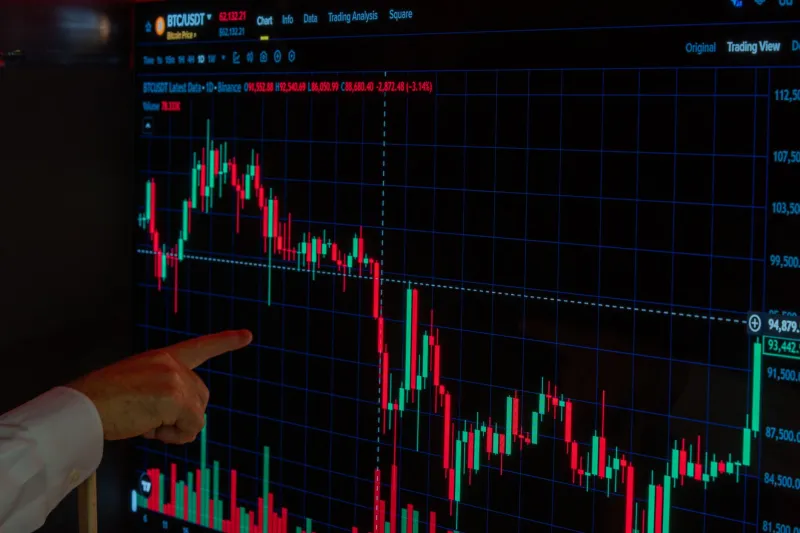
Slow Monkey, Fat Stack: The Boring Wealth-Building Playbook Every Solana Ape Ignores
Nobody posts their staking rewards on Twitter. Nobody goes viral for setting up a recurring SOL purchase every Tuesday at 9 AM. There are no Telegram groups with rocket emojis dedicated to methodically rebalancing a diversified Solana position over eighteen months. And that's exactly why it works.
Welcome to the least exciting, most effective wealth-building conversation happening in the Solana ecosystem. Grab a banana, sit down, and let's talk about what actually compounds versus what just feels like it should.
The Lottery Ticket Mentality Is Making You Poor
Before we get into the practical stuff, let's acknowledge the elephant — or the ape — in the room. The Solana ecosystem is designed to feel like a casino. The meme tokens, the NFT flips, the 48-hour project launches with 10,000% APY promises — all of it is engineered to capture attention and exploit the human brain's love of variable rewards. It works brilliantly. It also transfers money from retail wallets to early insiders at an industrial scale.
The traders who actually build wealth on Solana are not the ones you hear about. They're not the guy who turned $500 into $200,000 on some dog token (though those people exist, and they're largely just lucky). They're the people who built a position in SOL at $30, staked it consistently, participated in legitimate DeFi protocols, and woke up two years later significantly richer without a single viral moment to show for it.
Boring? Absolutely. Effective? Without question.
Dollar-Cost Averaging Into SOL: The Strategy That Doesn't Need a Hot Take
Dollar-cost averaging — buying a fixed dollar amount of an asset at regular intervals regardless of price — is so simple it almost feels insulting to explain. And yet the majority of retail crypto participants don't do it, because it requires resisting the urge to time the market, which is basically asking a golden retriever to resist chasing a squirrel.
Here's what DCA into SOL has looked like historically for disciplined practitioners: they bought at $200, they bought at $15, they bought at $80, and they bought at $150. Their average cost basis ended up somewhere reasonable in between, and their total stack grew consistently without requiring a single correct market prediction.
The practical setup for a US-based investor is straightforward. Platforms like Coinbase, Kraken, and several others support recurring purchases. You set it, you forget it, you go live your life. The amount doesn't need to be dramatic — even $50 a week compounds meaningfully over a two to three year horizon, particularly when combined with staking.
The psychological benefit is underrated. When you're DCAing, a price drop is just a cheaper purchase, not a catastrophe. It reframes volatility from threat to opportunity, which is the correct relationship to have with a high-volatility asset class.
Staking: The Slowest, Most Reliable Banana Dispenser in the Jungle
Solana's proof-of-stake architecture means that holding SOL and participating in network security earns you more SOL. This is not complicated. This is not a scam. This is the base layer of Solana wealth accumulation, and a surprising number of retail holders either don't do it or do it lazily.
Native SOL staking currently yields somewhere in the range of 6 to 8 percent annually, depending on validator choice and network conditions. That's not going to make you rich overnight. Over five years on a meaningful position, it compounds into something genuinely significant — especially if the underlying SOL price appreciates.
Validator selection matters more than most people realize. Choosing a validator with low commission rates (under 5% is reasonable), high uptime, and genuine community involvement makes a measurable difference in long-term returns. Marinade Finance and similar liquid staking protocols offer an alternative for holders who want staking rewards without locking up their SOL entirely — mSOL can still be deployed in DeFi while earning base staking yields.
The key insight here: staking is not a trading strategy. It's a wealth preservation and slow accumulation mechanism. Treat it like a savings account with better interest rates than anything your bank is offering right now.
Yield Farming on Solana: Where It Gets Interesting (and Dangerous)
Yield farming — providing liquidity to decentralized exchanges and lending protocols in exchange for fee revenue and token incentives — can meaningfully accelerate wealth building on Solana. It can also blow up your portfolio if you're not careful. This section comes with more asterisks than the others.
Legitimate yield opportunities on Solana exist through established protocols like Raydium, Orca, and Kamino Finance. Providing liquidity to high-volume trading pairs — SOL/USDC being the most obvious — generates fee income that compounds over time. The risks are real: impermanent loss can erode gains in volatile markets, and smart contract exploits remain a genuine threat in DeFi.
The practical framework for responsible yield farming: stick to audited, established protocols; only farm with assets you'd be comfortable holding anyway; treat the yield as a bonus rather than the primary thesis; and never put more than 20 to 30 percent of your total Solana portfolio into active yield positions.
The "10,000% APY" farms you see launching every week are not yield farming opportunities. They are scheduled wealth transfers. Treat them accordingly.
Seasonal Patterns and Solana-Specific Timing
The Solana ecosystem has developed observable rhythms that patient investors can use to their advantage. Network activity and token prices tend to spike around major Solana conferences and hackathons — Breakpoint being the most significant annual event. New project launches cluster around these periods, which creates both opportunity and noise.
Broadly speaking, the four-year Bitcoin halving cycle still exerts gravitational pull on the entire crypto market, including SOL. The historically strong performance windows in the 12 to 18 months following a halving event suggest that aggressive accumulation in the preceding bear market periods has been consistently rewarded for patient holders.
None of this is a guarantee. Anyone telling you otherwise is selling something.
The Portfolio Framework Nobody Wants to Hear About
Here's the unsexy structure that actually works for retail Solana investors building over a multi-year horizon. Allocate the majority of your Solana exposure — somewhere between 60 and 70 percent — to core SOL holdings with staking active. Put 15 to 20 percent into legitimate yield positions on established protocols. Reserve a small speculative allocation — 10 to 15 percent maximum — for the meme tokens and NFT plays that make this ecosystem fun.
That last bucket is your entertainment budget. Treat it like Vegas money: you might win, you might lose, and you go in knowing both outcomes are acceptable. What you don't do is let the entertainment budget eat the whole portfolio because a Telegram group told you a dog token was about to 500x.
The apes who last in this jungle aren't the ones swinging the hardest. They're the ones who showed up consistently, stacked quietly, and let time do the heavy lifting.